

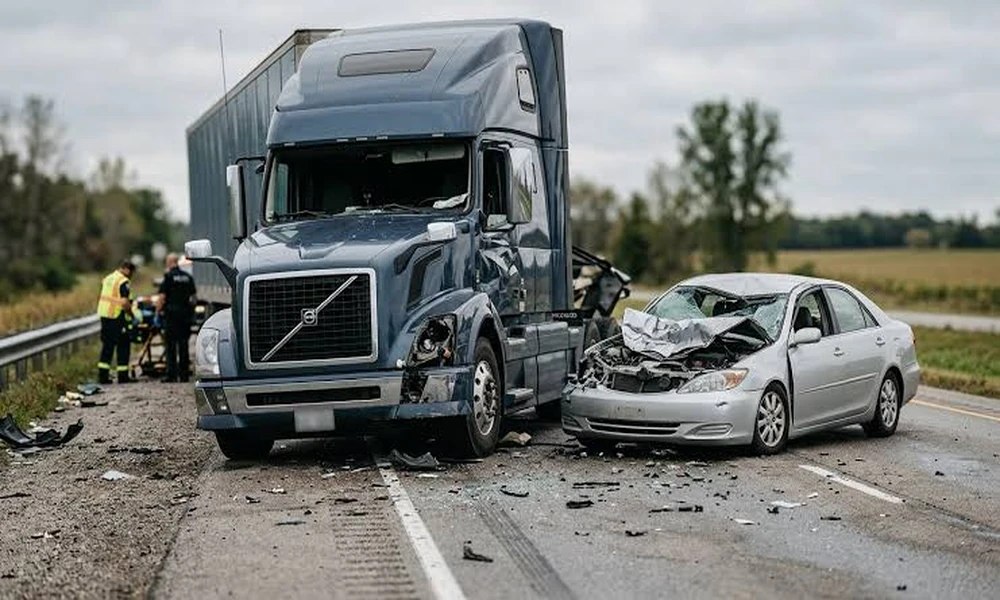
The first call after a fatal truck crash usually isn’t to 911. It’s to a risk manager. Within minutes of a collision, a carrier’s safety department is waking up a claims team, and by the time paramedics finish loading the ambulance, a corporate response is already running in parallel.
That asymmetry surprises people. A family is standing on the shoulder of I-35 in shock while a fleet’s legal machinery spins up hundreds of miles away. I’ve watched both sides of this from years of covering commercial litigation, and the speed gap is the single biggest reason truck crash cases turn out the way they do.
So here’s what really happens in those first hours, why the paperwork is the whole ballgame, and what you should do if it happens to someone you love.
Why the Clock Runs Against You
A commercial carrier doesn’t treat a crash as a tragedy first. It treats it as an exposure event, and exposure gets managed. The company’s insurance carrier typically has standing instructions: notify us immediately, preserve nothing beyond what the law requires, and start building the defense file.
That last part is the one that stings. Evidence in a truck case decays fast. Electronic logging device data can roll off its retention window. Dashcam footage gets overwritten on a loop unless someone pulls it. Driver hours-of-service records sit in a system that the carrier alone controls.
According to the Federal Motor Carrier Safety Administration, motor carriers are required to keep driver qualification and hours-of-service documentation, but retention windows are limited and the carrier decides how those files get stored and for how long.
You can’t subpoena a file that was deleted last Tuesday. That’s the cold reality, and it’s why the speed of the corporate response matters so much.
A Dispatcher’s Night, Hour by Hour
Here’s a version of the sequence I’ve had described to me more than once, stitched together from people who worked inside carriers.
Minute one: the driver calls dispatch. The dispatcher’s job in that moment isn’t to find out if anyone’s hurt. It’s to establish what the company knows and when it knew it.
Hour one: the safety director is on the phone with the insurer. A claims adjuster is assigned. A decision gets made about whether to send a company representative to the scene, and sometimes that person arrives before the tow trucks finish up.
Hour three: a defense attorney may already be retained. Not to file anything yet, but to manage the investigation and think about what the company should and shouldn’t say.
Day one into day two: the carrier starts collecting its own records, sometimes before anyone on the other side has thought to ask for them.
None of this is illegal. It’s just corporate risk management, and it’s completely routine. The uncomfortable part is that it happens whether or not the family has anyone working on their behalf.
What’s Actually in That File Cabinet
If you’re trying to understand what a carrier knows, these are the documents that matter most:
- Electronic logging device records showing hours driven, rest breaks, and any edits to those entries
- Driver qualification files, including employment history and any prior violations
- Maintenance and inspection logs for the tractor and trailer
- Dashcam and telematics data, if the fleet runs them
- Dispatch communications, including texts and load assignment messages
- Drug and alcohol testing records, subject to federal rules
Any one of these can flip a case. A maintenance log showing a brake issue flagged twice and never fixed tells a very different story than a clean record. A dispatch message pushing a driver to make a delivery window reads differently than a routine assignment.
The Part Most Families Get Wrong
People assume the insurance company will call and offer something fair. Occasionally that happens. More often, the first offer arrives fast, before anyone understands the full extent of the injuries, and it’s framed as generosity.
Signing a release too early is the mistake I see most. Once you sign, the investigation stops being your problem in a legal sense. You’ve given up your ability to demand those records, and you’ve capped what the case can ever be worth.
I’d tell anyone in this situation to talk to a lawyer before signing anything, even a document that looks like a simple medical authorization. That’s not paranoia. It’s just how the other side is playing it.
According to crash data from the National Highway Traffic Safety Administration, large trucks are involved in thousands of fatal crashes every year, and the victims are overwhelmingly people in the smaller vehicle. You are not the repeat player here. The carrier is.
What You Should Do in the First 48 Hours
If you or someone in your family is dealing with this right now, here’s a short list worth acting on:
- Write down everything you remember about the crash while it’s fresh, including time of day, weather, and where the truck was positioned.
- Get photos of the vehicles, the scene, and any visible damage before things get moved.
- Keep every document, including the police report number and any correspondence from an insurer.
- Don’t give a recorded statement to the trucking company’s insurer. You aren’t required to, and it won’t help you.
- Talk to an attorney who handles commercial truck cases specifically, not just car crashes.
That last point matters more than people expect. Truck litigation runs on federal regulations, corporate discovery, and expert reconstruction work that a general practice attorney may never have touched.
Firms that do this work full time, like National Trucking Attorneys, build their entire practice around the idea that the carrier’s response starts immediately, so yours should too. That’s the logic behind the round-the-clock response teams you see in this niche.
The Regulation Side You Probably Haven’t Heard Of
Commercial trucking is one of the most heavily regulated industries in the country. The U.S. Department of Transportation oversees the framework that governs driver hours, vehicle maintenance, and carrier safety ratings, and carriers are graded on that record.
Here’s the interesting part. A carrier’s safety rating is a public asset.
It affects insurance premiums, bidding on contracts, and whether shippers want to work with them. So when a crash happens, the company has a real incentive to manage how that event looks on paper, independent of what actually occurred. That’s not a conspiracy theory. It’s basic business. But it explains why the paper trail gets curated so quickly, and why getting to it early matters so much.
The Bottom Line
By the time a truck crash makes the local news, the corporate side of it is already well underway. Records are being pulled. Adjusters are being briefed. A defense strategy is taking shape. Families don’t have to match that pace, but they do need to understand it. The case isn’t decided in a courtroom years later. It’s often decided in the first week, in what got preserved and what quietly didn’t. If this is your situation, who’s working on your side of the table right now?